Digital Drug Safety CardMFDS R&D · 2022-2024
Introduction video 2 min · narrated, with subtitles
A patient who has had a drug allergy or a severe adverse drug reaction meets the same risk again at every new hospital. This project standardized the issuing criteria and the data elements of the drug safety card patients carry, and turned it into a digital drug safety card whose QR code opens the full detail. At the same time we built a standard form for exchanging adverse reaction information between hospitals, plus the sharing platform myadr.care, and ran it in 9 university hospitals. The work ran over three annual phases from February 2022 to December 2024 with support from the Ministry of Food and Drug Safety. Chungbuk National University Hospital was the lead institution, with the Seoul National University R&DB Foundation and Kakao Healthcare as partners. The sharing standard set here was adopted as the standard for the Ministry of Health and Welfare drug allergy information sharing program.
30-second demo
Outcomes at a glance
What we built
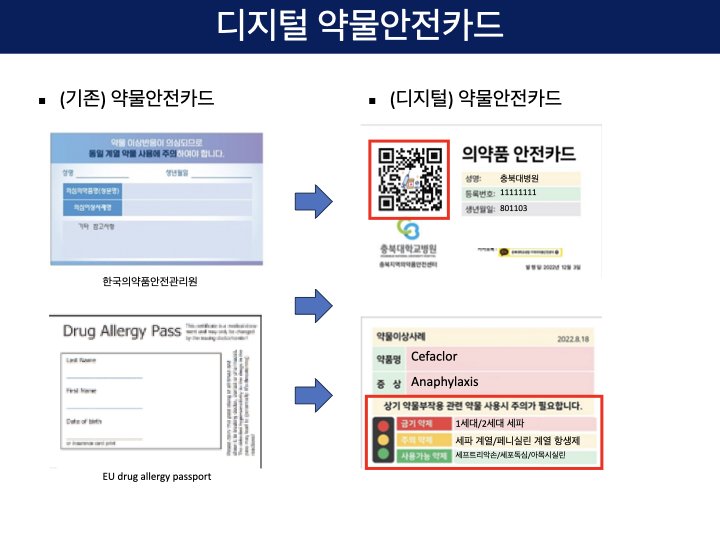
Digital Drug Safety Card
We reviewed the existing paper and plastic drug safety cards and the European Drug Allergy Passport, then designed a new form. A QR code sits on the front, and the card shows the culprit drug and the symptoms along with the contraindicated, caution and safe-to-take drugs, like a traffic light. Opening the QR code brings up the full detail, down to causality and severity.
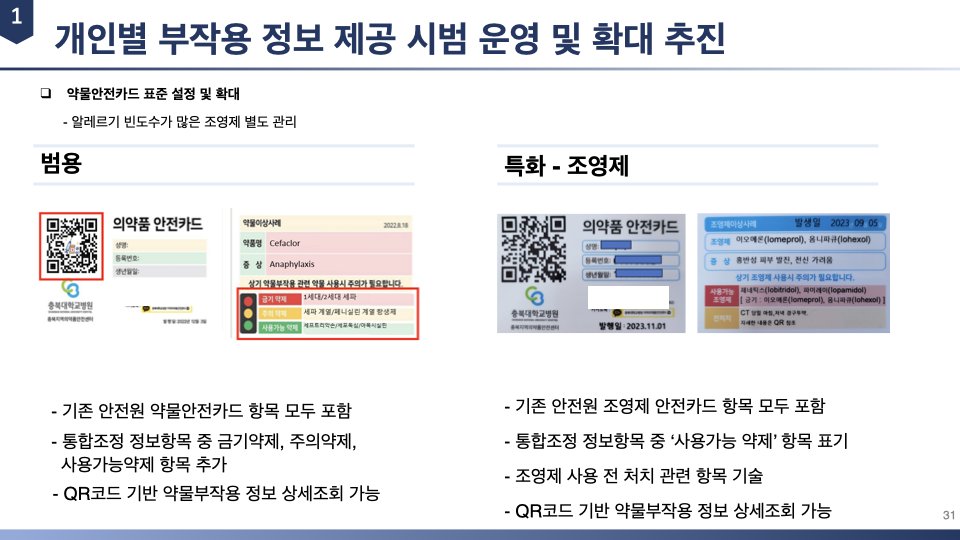
Standard drug safety card form
We settled on two forms: a general one carrying every data element of the Korea Institute of Drug Safety and Risk Management (KIDS) drug safety card, and a dedicated one for contrast media, where allergic reactions are common. Depending on what suits the hospital, a site can choose a form that prints the reconciliation information on the card itself, or a form that carries only the adverse event and sends the rest to the QR code.
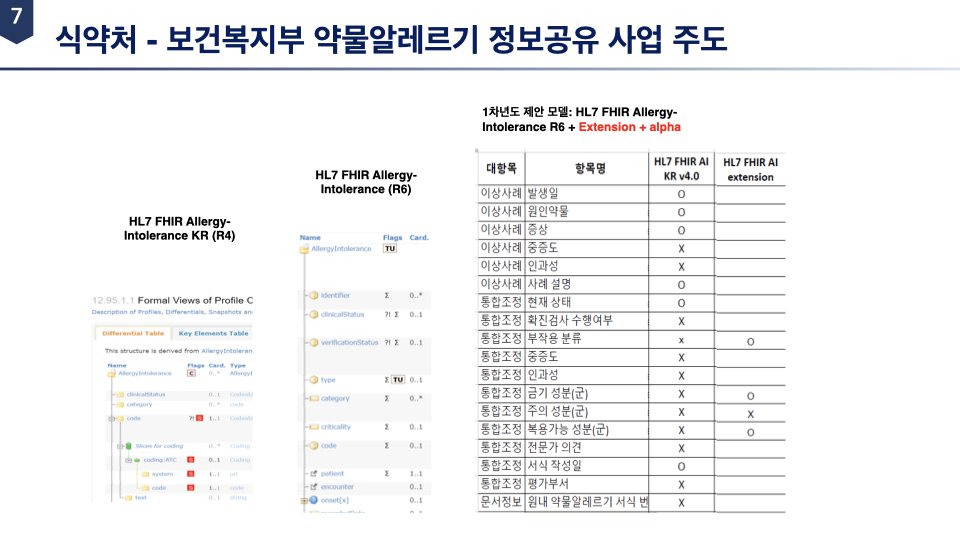
Standard form for drug allergy information sharing
We defined the data elements needed to move adverse reaction information between hospitals and mapped them to HL7 FHIR AllergyIntolerance. On top of the onset date, culprit drug, symptoms, severity and causality of the adverse event, we added reconciliation elements as extensions: contraindicated, caution and safe-to-take drug groups. Adverse event names follow MedDRA and severity follows CTCAE.
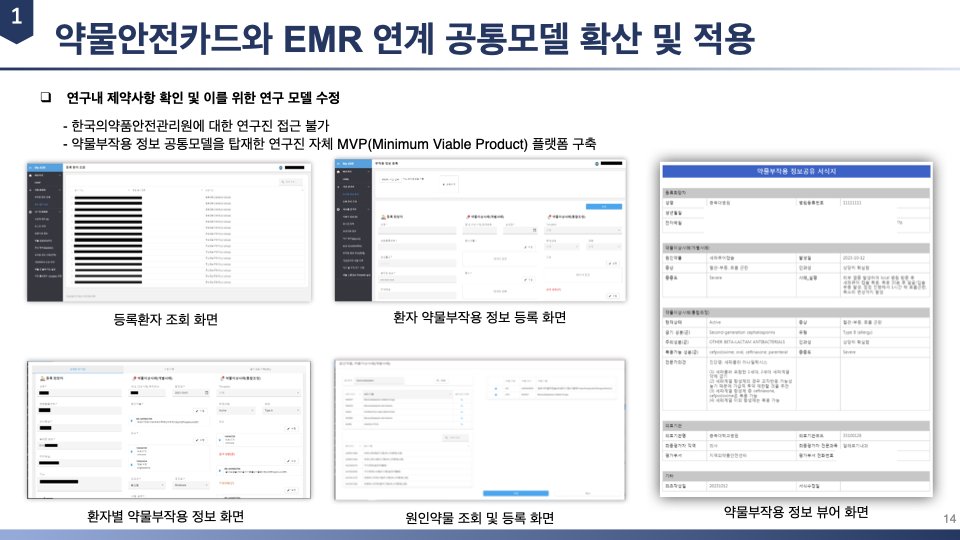
My ADR platform (myadr.care)
A web platform that carries the standard form as it is. It handles patient registration, culprit drug lookup, and the entry and review of adverse reaction information, and works with KD codes, ATC codes and SNOMED CT codes side by side. A template feature prefills the data elements each institution uses, and from a saved record you can print a PDF card, issue a QR card or send a KakaoTalk alert on the spot. We ran the test server and the service server separately and published the user manual on GitBook.
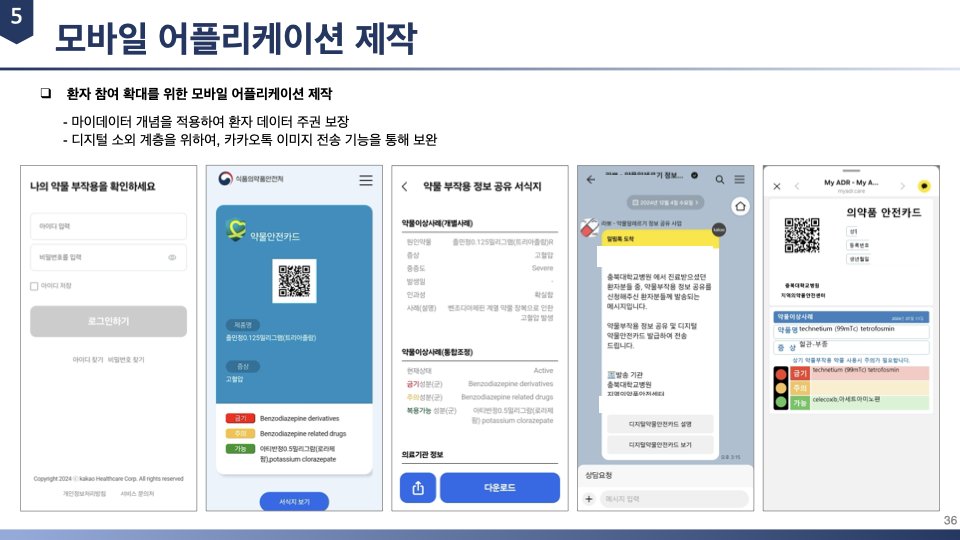
Patient mobile app and KakaoTalk alerts
Working with Kakao Healthcare, we built an app on the MyData model, where the patient holds and reads their own adverse reaction record. For patients who find apps hard to use, we added a second route that sends the digital drug safety card image and link by KakaoTalk alert.
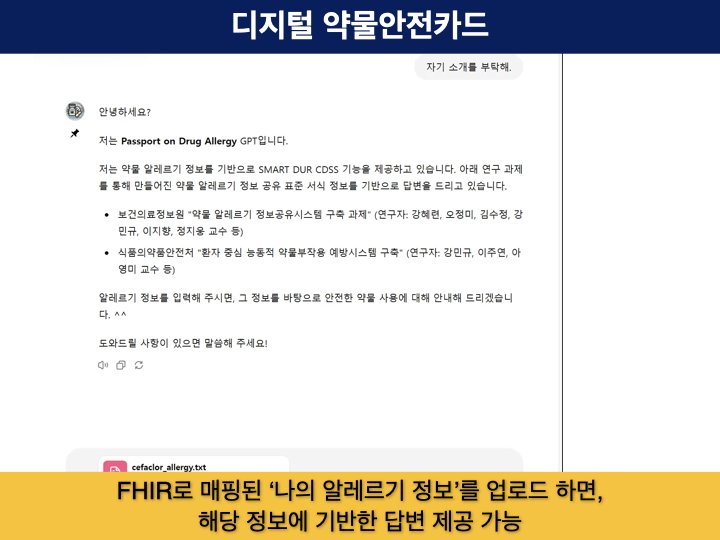
Passport on Drug Allergy GPT
A generative language model demo with the standard form and the shared data elements written into its instructions. Upload an allergy information file mapped to FHIR and it answers from that file, showing whether a given drug falls under contraindicated, caution or safe to take by ATC code. It can also translate the card into other languages, Chinese included.
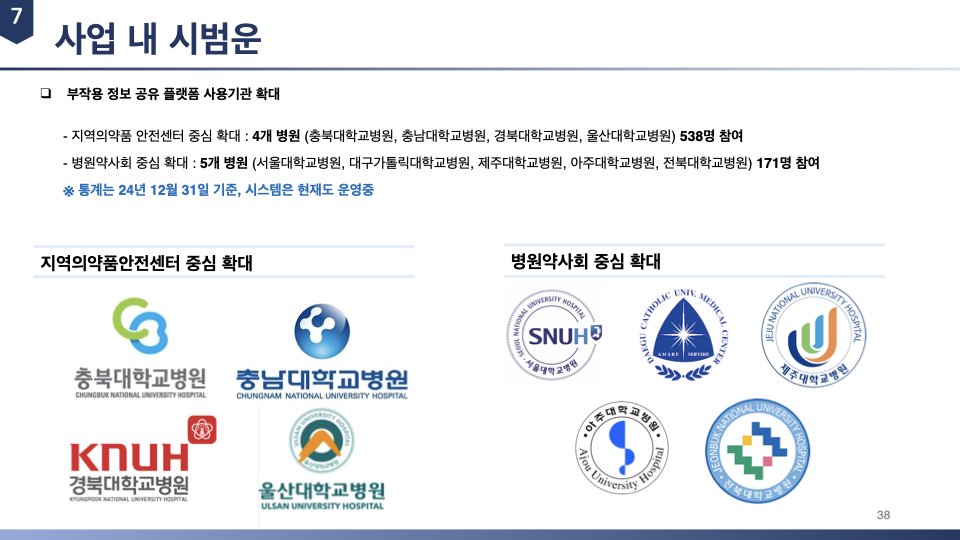
Rollout led by Regional Pharmacovigilance Centers
Using the Chungbuk National University Hospital workflow as the reference process, we widened participation along two tracks: the Regional Pharmacovigilance Centers and the Korean Society of Health-System Pharmacists. Card issuing differs by hospital, so we wrote down and fixed a process for each site, from putting a QR sticker on a physical card to sending the link by KakaoTalk alert alone. We also piloted a link that fills in the sharing form inside the EMR and posts it to the platform over an API.
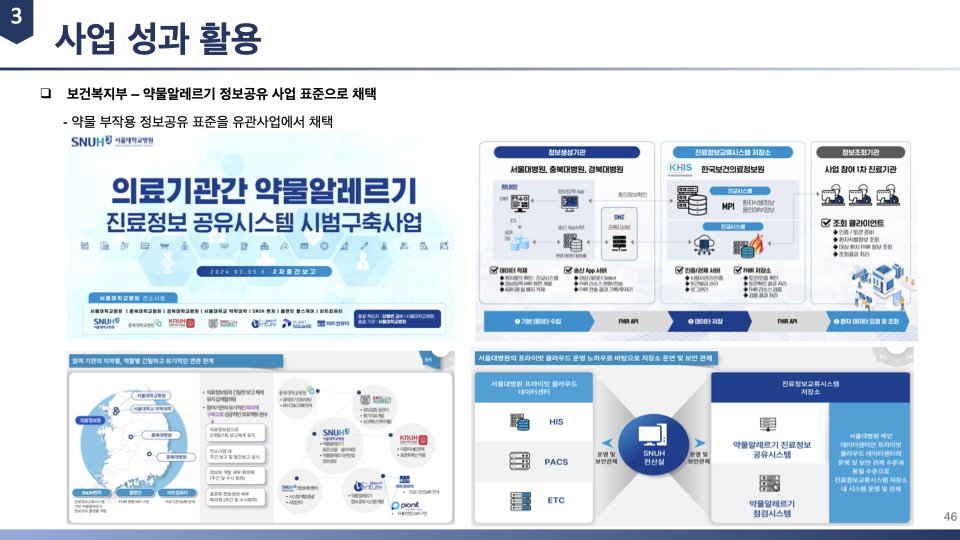
Adopted as the standard for a Ministry of Health and Welfare program
The adverse drug reaction sharing standard built in this project was adopted as the standard for the Ministry of Health and Welfare pilot program on a drug allergy information sharing system between institutions. We also proposed adding drug allergy to the allergy and intolerance section of the Health Information Highway, and an upgrade to the allergy elements of the Korean Core Data for Interoperability (KR-CDI) held by the Korea Health Information Service.
Timeline
Results and dissemination
- Commendation from the Minister of Health and Welfare, 6th Healthcare Data Innovation Forum (2022.12.15)
- 1 SCIE paper: Lee S, Shin J, Kang MG, Lee JY, Yu YM, Ah YM. A study on user willingness to participate in an adverse drug event information sharing system. BMC Public Health. 2024.10.15
- 1 registered patent: Method and apparatus for detecting culprit drugs and providing optimized medication using personalized side-effect data (filed 2022.09.27, registered 2023.01.29, registration no. 10-2609482)
- 1 patent filing: Method and apparatus for probability-based estimation of adverse drug reactions (filed 2024.04.05, application no. 10-2024-0046870)
- Adopted as the information sharing standard in the Ministry of Health and Welfare pilot program for a drug allergy information sharing system between institutions
- Added drug allergy elements to the allergy and intolerance section of the Ministry of Health and Welfare Health Information Highway and proposed the standard for them
- Proposed an upgrade of the allergy elements in the Korean Core Data for Interoperability (KR-CDI) at the Korea Health Information Service
- Wrote and distributed a draft standard guideline for managing and sharing personal adverse drug reaction information, together with a guideline for hospitals to hand out
- Drafted amendments to the Pharmaceutical Affairs Act for sharing adverse drug reaction information and negotiated them with the ministries concerned (Pharmaceutical Affairs Act Articles 23-3, 68-7 and 68-8, and Enforcement Decree Article 38-2)
- Built and released the myadr.care platform with a user manual, an administrator guide, and a training manual for the patient app
- 6 presentations at conferences in Korea and many talks at community and government symposiums (Korean Society of Pharmacoepidemiology and Risk Management, Korean Society of Health Informatics and Statistics, Korean Society of Medical Informatics, Korean Society of Health-System Pharmacists and others)
- Self-evaluation rated all three areas as Very Excellent: quality of the research results, impact, and diligence of execution